💧 Water purifier guide
Sediment Filter Types: Which One Does Your Water Need?
What a sediment filter does — and does not do
A sediment filter is a physical sieve. Water passes through a porous cartridge and anything larger than its pore size is trapped: sand, silt, clay, rust particles, pipe scale. That is all it does.
It removes nothing dissolved. TDS, hardness, fluoride, arsenic, pesticides, bacteria and viruses all pass straight through. That is why every purifier puts a sediment stage first and something else — RO, UV, UF or carbon — after it. The sediment stage's job is to protect those later stages from clogging.
Micron ratings explained
The micron rating is the approximate particle size the filter stops. Smaller numbers stop finer particles, but they also clog faster and cut flow sooner.
| Rating | Stops | Typical use |
|---|---|---|
| 1 micron | Very fine silt, some cysts | Final polishing; clogs quickly on dirty water |
| 5 micron | Fine silt, rust particles | Standard pre-filter inside a domestic RO or UV purifier |
| 10 micron | Silt and fine sand | Two-stage setups, ahead of a 5-micron cartridge |
| 20–25 micron | Sand, visible dirt | External pre-filter for borewell or tanker water |
| 50–100 micron | Coarse sand and grit | Whole-house or overhead-tank inlet protection |
Tip
The four types, compared
- Spun (melt-blown) polypropylene — the white cylinder in almost every Indian purifier. Cheap, consistent and food-safe. It is a depth filter, trapping particles through its thickness. Not washable; replace it.
- Pleated — a folded sheet with far more surface area. Holds more dirt before flow drops and can usually be rinsed and reused a few times. Better for high-sediment water; costs more upfront.
- String-wound — polypropylene or cotton yarn wound around a core. Handles heavy sediment and rust well, which makes it a common choice for iron-rich borewell water.
- Backwashable / spin-down — a reusable mesh screen (often 50–100 micron) with a flush valve. No cartridges to buy; used as whole-house protection at the tank inlet, not for drinking-water polishing.
Which one should you buy?
- Municipal supply, water looks clear — you need nothing extra. The 5-micron cartridge inside your purifier is enough.
- Tanker water, or occasional muddy supply — add an external 20-micron spun or pleated pre-filter before the purifier.
- Borewell water with rust or iron staining — a string-wound pre-filter, plus an iron-removal stage if the staining is heavy. A sediment filter traps rust particles but not dissolved iron.
- Whole house (bathrooms, washing machine, geyser) — a backwashable 50–100 micron filter at the overhead-tank outlet.
When to change it
There is no fixed interval — it depends entirely on how dirty the water is. The two reliable signs are a drop in flow from the purifier and a cartridge that has turned brown or orange. On clean municipal water a spun cartridge can last 6–12 months; on borewell or tanker water, 2–4 months is common.
A clogged sediment filter does not make water unsafe, but it starves the RO membrane of pressure, which cuts output and raises the reject-water ratio. Replacing a ₹150–₹300 pre-filter on time is the single cheapest way to protect a membrane that costs several thousand rupees.
Frequently asked questions
Which sediment filter is best?
Does a sediment filter reduce TDS?
What micron sediment filter is used in RO?
Can I wash and reuse a sediment filter?
Does a sediment filter remove bacteria?
How often should a sediment filter be changed?
Still not sure which water purifier fits?
Tell us your city and situation. We will give you a straight answer — including when the honest answer is that you do not need to spend much at all.
Shortlists that follow this advice
- Best Water Purifiers for Borewell Water (2026)best water purifier for borewell water
- Best Water Purifiers for Tanker Water (2026)water purifier for tanker water
- Best Water Purifiers for Hard Water (2026)water purifier for hard water
- Best RO Water Purifiers in India (2026)best ro water purifier in india
Read next
Models that fit this advice
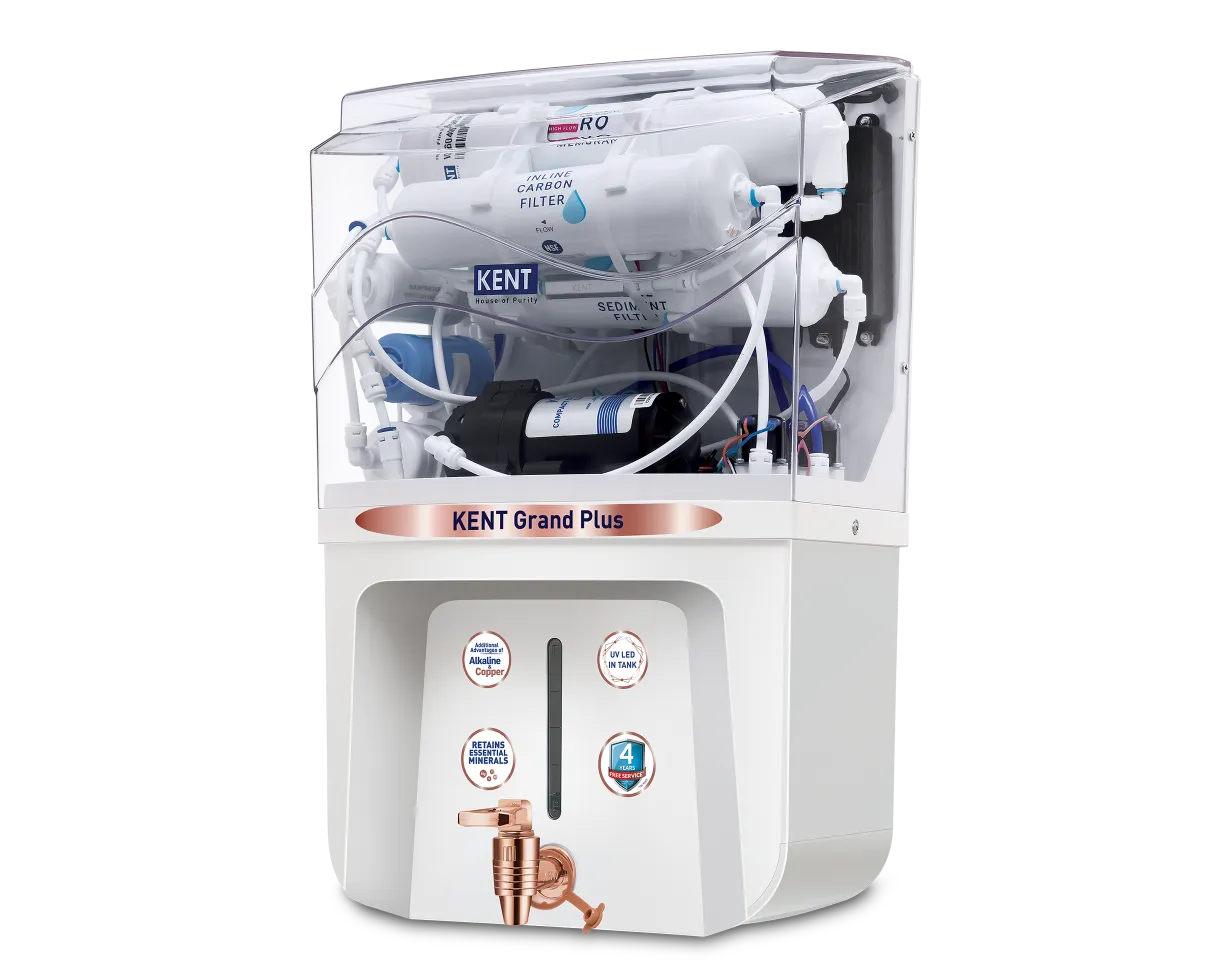
KENT Grand Plus
KENT
- RO + UV + UF + TDS Controller
- 9 litres tank
- Up to 2000 ppm TDS
Families on borewell, tanker or high-TDS municipal supply who want the safest all-round choice.
View details
AO Smith Z9 Green RO
AO Smith
- RO + SCMT
- 9 litres tank
- Up to 3000 ppm TDS
Premium kitchens, high-TDS or brackish supply, and households that drink a lot of tea and coffee.
View details
Aquaguard Delight NXT
Aquaguard
- RO + UV e-boiling + UF + MTDS + Active Copper
- 6 litres tank
- Up to 2000 ppm TDS
Buyers who value service reliability and compact design over maximum tank capacity.
View details
KENT Pearl RO
KENT
- RO + UV + UF + TDS Controller
- 8 litres tank
- Up to 2000 ppm TDS
Renters and anyone who cannot drill walls, but still needs full high-TDS RO purification.
View details