🌬️ Air purifier guide
Air Purifier for a Newborn Baby: What Actually Matters
Is an air purifier safe for a newborn?
A mechanical HEPA purifier is safe: it is a fan pulling air through a fibre filter. It removes dust, pollen and fine particulate (PM2.5) and returns the same air, cleaner. Nothing is added.
The one category to think about is purifiers that actively emit something — ion generators, plasma or streamer discharge, and above all dedicated ozone generators, which should never be used in an occupied room. Mainstream brands keep ion-based output within published safety limits, but for a nursery the simplest rule is that a filter-only unit leaves nothing to question.
Important
The four specifications that matter
- HEPA grade — H13 or True HEPA captures 99.95% or more of particles at the hardest-to-catch size. 'HEPA-type' or 'HEPA-like' is a marketing term, not a grade.
- Sleep-mode noise — below about 25 dB is roughly a whisper. Many brands publish only their maximum noise; a published minimum is the figure that matters overnight.
- CADR — Clean Air Delivery Rate, in m³/hr. It decides how quickly the room actually gets clean. Oversizing is fine: a bigger unit on a low speed is quieter than a small one flat out.
- Filter-only operation — either no ioniser at all, or one you can switch off.
Models that publish the numbers
These are chosen on published specifications, not hands-on testing. Each quotes both an H13-class filter and a low minimum noise figure, which most brands do not publish at all.
| Model | Filter | Quietest published setting | Room size |
|---|---|---|---|
| Levoit Core 300S | H13 True HEPA + carbon | 24 dB (sleep mode) | Up to 215 sq ft — a small nursery |
| Philips AC1215 | NanoProtect HEPA + carbon | 20.5 dB | Up to 333 sq ft |
| Coway Sleek Pro AP-1019C | H13 HEPA | 22 dB | Up to 355 sq ft |
| Philips AC2939 | H13-class NanoProtect HEPA | 20.5 dB | Up to 851 sq ft — a large bedroom |
Note
Where to put it
- One to two metres from the cot, with clear space around the unit so it can draw air from all sides.
- Not pointed at the baby — a constant draught is uncomfortable, even when it is clean air.
- Run it with the door and windows closed for 30 minutes before the baby sleeps, then leave it on sleep mode.
- Keep the cable out of reach, and move the unit before your baby starts crawling.
Filters are the real cost
A purifier is only as good as its filter, and a clogged filter moves far less air. Budget for replacements before buying: Philips rates the HEPA in the AC1215 and AC2939 at up to 24 months, Levoit at 6–8 months for the Core 300S, and Coway at up to 12 months. In high-pollution months in north India, expect the shorter end of every range.
Frequently asked questions
Is it safe to use an air purifier for a newborn baby?
Which air purifier is best for a baby's room?
Should an air purifier run all night in a baby's room?
How far should an air purifier be from a baby's cot?
Do air purifiers help babies with allergies or colds?
Is an ionizer air purifier safe for babies?
Still not sure which air purifier fits?
Tell us your city and situation. We will give you a straight answer — including when the honest answer is that you do not need to spend much at all.
Shortlists that follow this advice
Read next
Models that fit this advice
Levoit Core 300S
Levoit
- 240 m³/h CADR
- Up to 215 sq ft
- True HEPA H13
Bedrooms and nurseries where noise matters more than raw coverage.
View details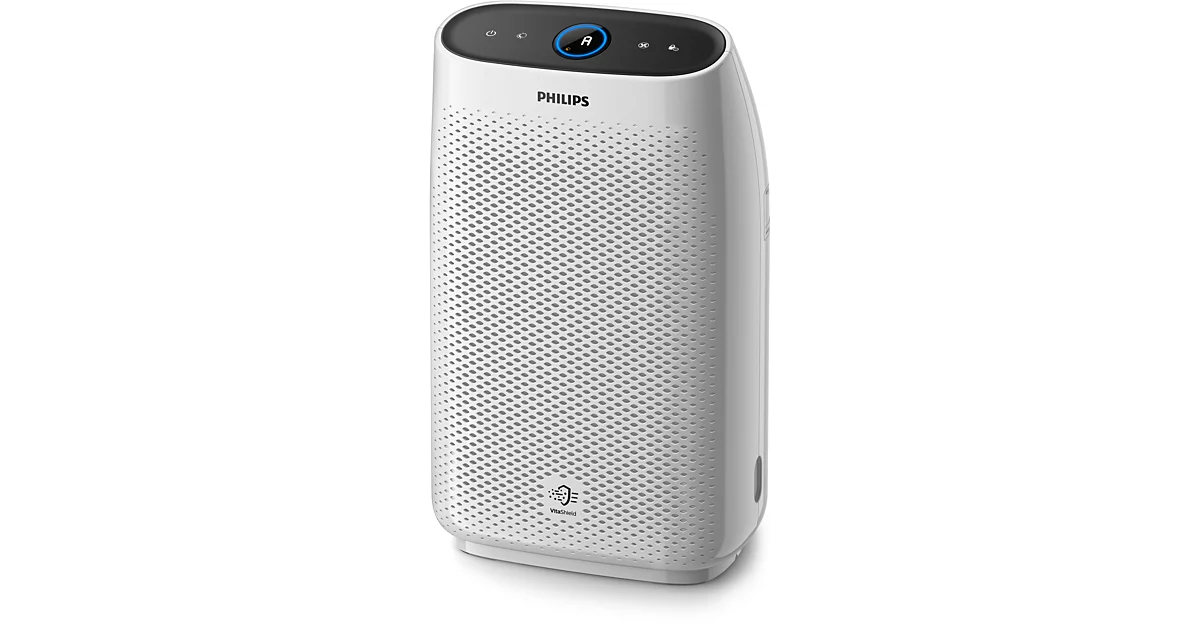
Philips AC1215
Philips
- 270 m³/h CADR
- Up to 333 sq ft
- True HEPA H13
The best-value bedroom air purifier for most Indian households.
View details
Coway Sleek Pro AP-1019C
Coway
- 246 m³/h CADR
- Up to 355 sq ft
- True HEPA H13
Bedrooms, allergy and asthma sufferers, and small rooms where floor space is unavailable.
View details
Philips 2000i Series AC2939
Philips
- 333 m³/h CADR
- Up to 851 sq ft
- True HEPA H13
Most homes in most Indian cities — the default answer if you want one purifier that just works.
View details